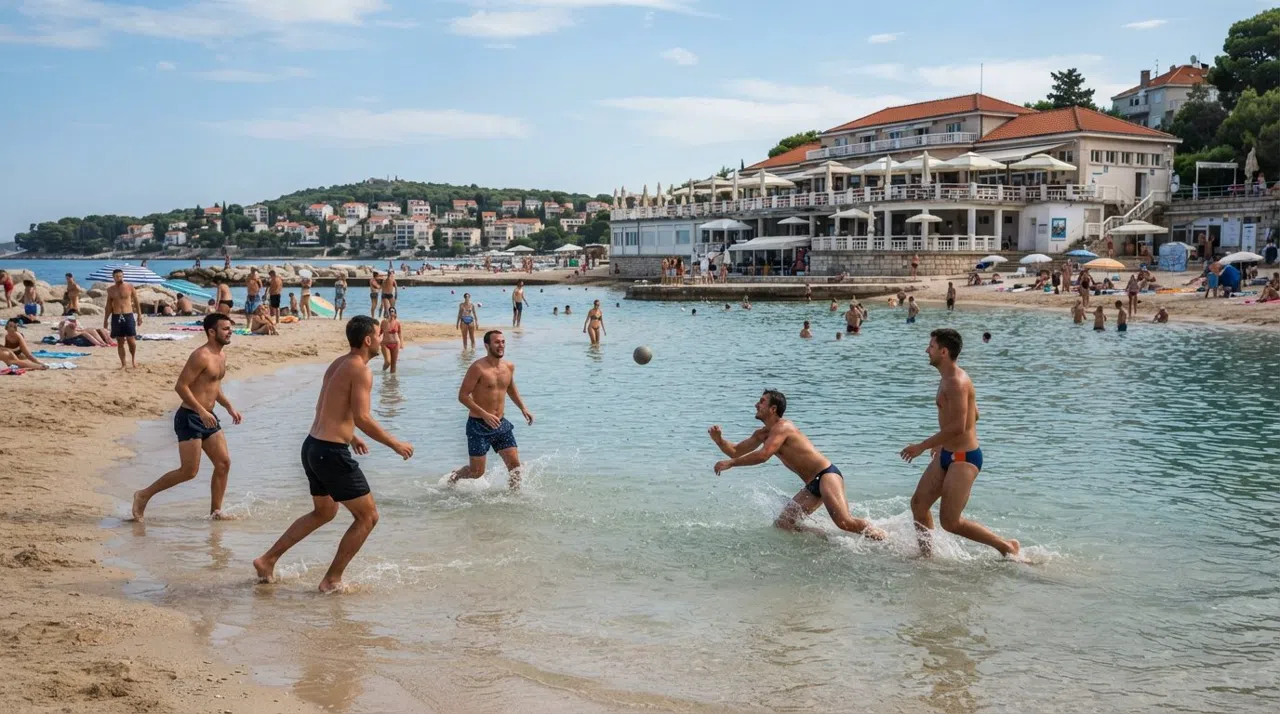
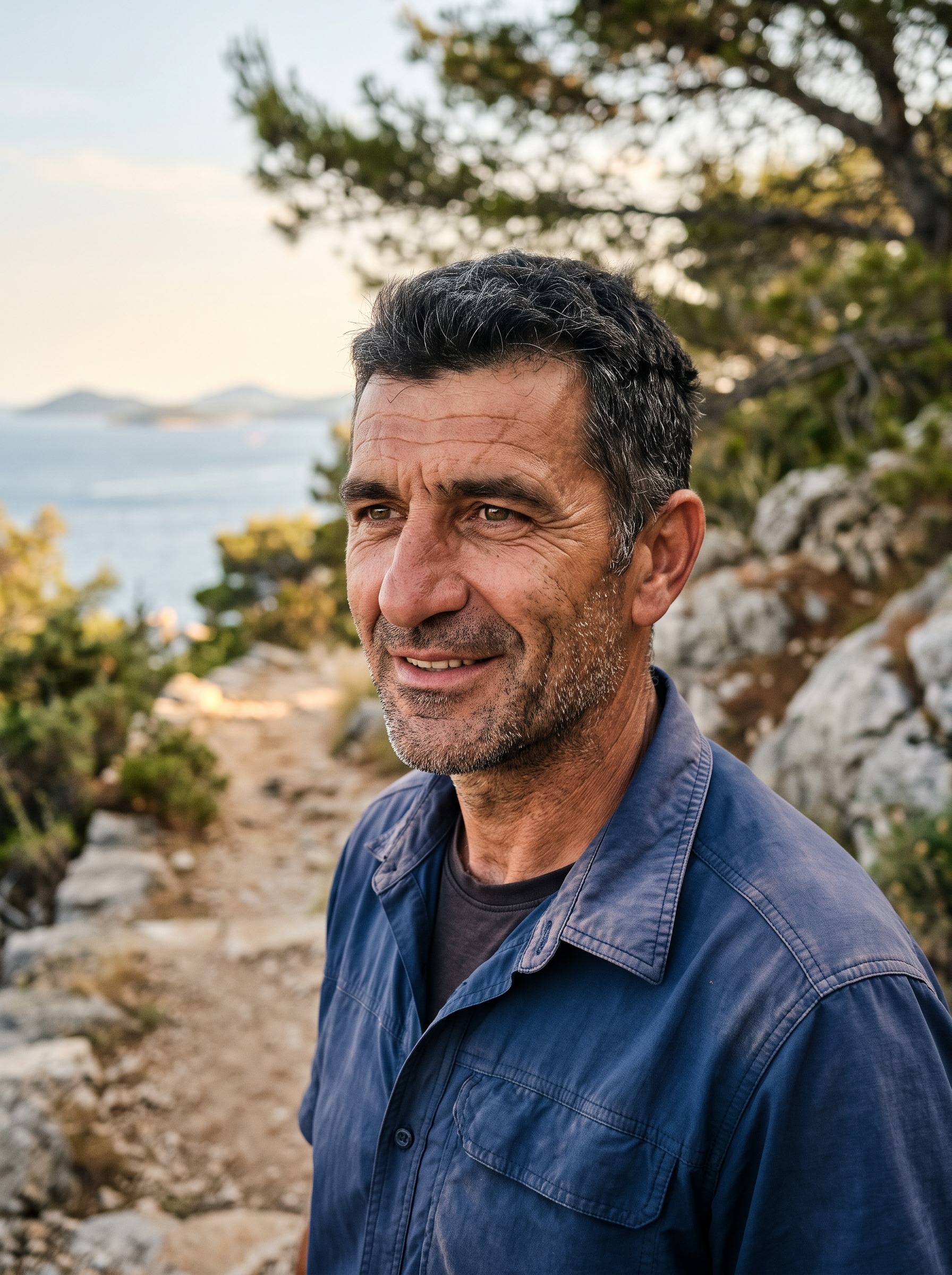
Bacvice is the one place in Split where the sea behaves itself. The bottom is sand, not the usual Dalmatian shingle, and the water stays ankle-deep for a good thirty metres out, which is why children, grandmothers and picigin diehards all end up on the same stretch of beach. The city learned to play a game here in 1908, the clubs behind the sand still run until the early hours in summer, and the whole thing sits just a short walk from Diocletian’s Palace. Split has many moods; Bacvice is the one where it lets its hair down.
What Bacvice is known for
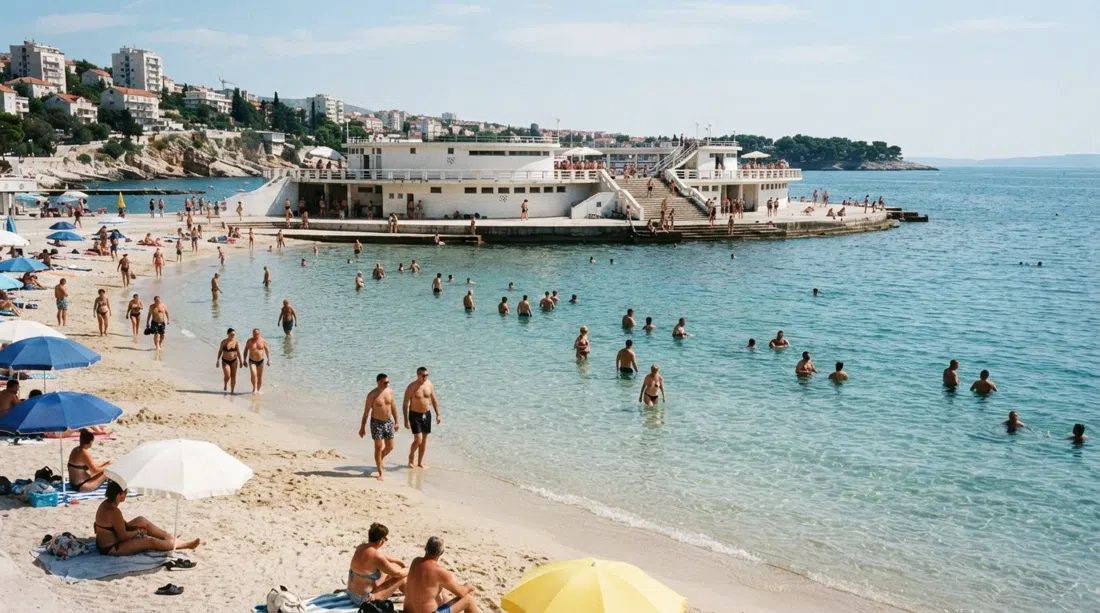
Three things, really: the sand, the game, and the party. The sand comes first because it explains everything else. Most of this coast is pebble and rock, but Bacvice is a genuine shallow bay with a sandy seabed, and that made it Split’s city beach long before anyone thought to call it a destination. The name is said to come from the barrel-shaped rocks that once ringed the cove, bacvice meaning little barrels in Croatian. A wooden bathing pier went up here in the 1890s, and the resort was formally opened in 1919, which is about as old-school as seaside leisure gets around here.
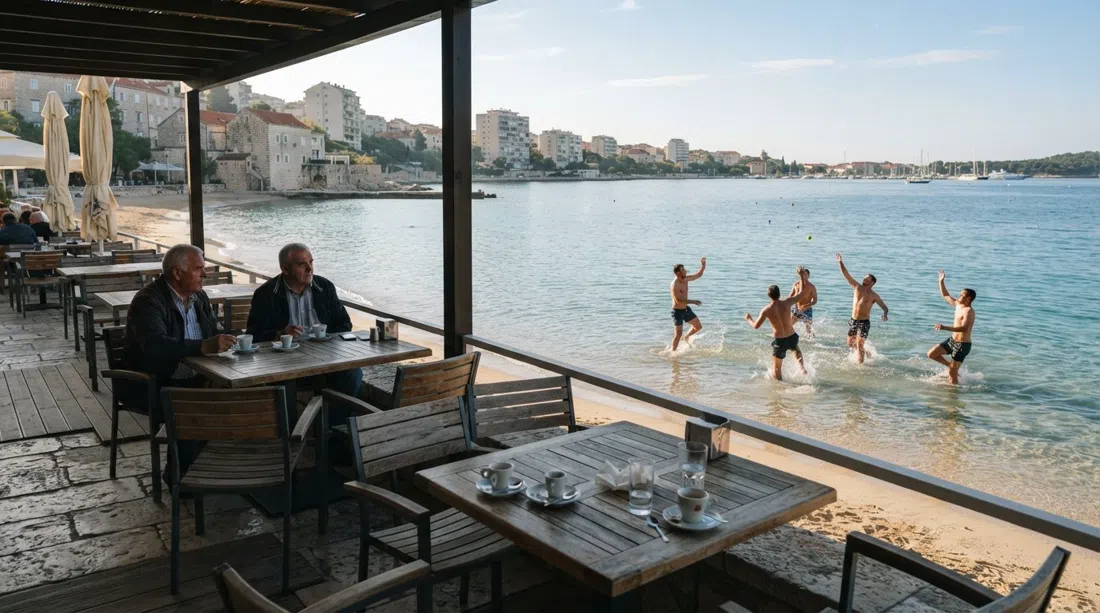
Then there is picigin, which Bacvice did not just adopt but invented. In 1908, Split students home from Prague could not play proper water polo in such shallow water, so they improvised a game of keeping a small ball aloft with open-palm slaps. No catching, no scoring in the usual sense, just cooperation and a lot of lunging into the shallows for the sake of the rally. It is now protected as Croatian intangible cultural heritage, and the purists will tell you it only truly belongs on this sand. If you want the real thing, come in the morning or late afternoon, when the regulars are out and the light is kind. On New Year’s Day, the hard cases still turn up in swimming trunks, which tells you most of what you need to know about Split.
The third act is the party, and it is not shy about itself. Bacvice is the city’s late-night spillway, the place people drift to once the Old Town’s wine bars begin to empty around 2am. The clubs are stacked into the pavilion terraces behind the beach, so the night can run from a swim to a cocktail to a dancefloor without changing postcode. It is loud, crowded, and absolutely not pretending to be a secret. Locals call it the Copacabana of Split, half-joking and half-proud, because there really is nowhere else quite like it on this stretch of coast.
Where to eat & drink
Bacvice eats in two registers. Down on the residential streets behind the sand, you get the honest konoba end of things: fish, wine, and Dalmatian plates that know their place. On the terrace above the bay, there is one place that lifts the mood properly when you want dinner to feel like an occasion rather than a refuel.
Konoba Pimpinella is the one to book if you want the local rhythm rather than the beach-bar version of it. It sits on the ground floor of an ordinary house and barely announces itself from the street, which is usually a good sign around here. Inside, the point is fresh Adriatic fish and old-school pasticada, that slow beef in a dark, sweet-sour sauce that turns up when a family wants to do dinner properly. In summer, get there before 8pm or you will be joining the queue of everyone else who had the same idea.
A few doors along, Restaurant Boban does a similar job with a slightly more polished dining room and a serious wine list. It is the sort of place where grilled white fish and shrimp are treated with the calm confidence they deserve. Nothing flashy, nothing overworked, just a long-running family restaurant doing the work.
Konoba Nevera, on Put Firula, leans into a nautical fit-out, all anchors and mosaic lamps, and turns out reliable seafood near the promenade. It is not trying to reinvent the wheel; it is trying to make sure the fish is good and the room feels like the coast.
For something more ambitious, Konoba Ma:Toni occupies a converted wine cellar a few steps off the sand. Stone vaults, warm light, a meat-forward kitchen — this is where the menu shifts from beach ease to proper dinner. Dry-aged steak, glazed beef ribs, oxtail ragu over gnocchi, and a deep Dalmatian wine list give it a different kind of pull. If you have spent the day in salt and sun, it is the sort of room that makes you sit back and order slowly.
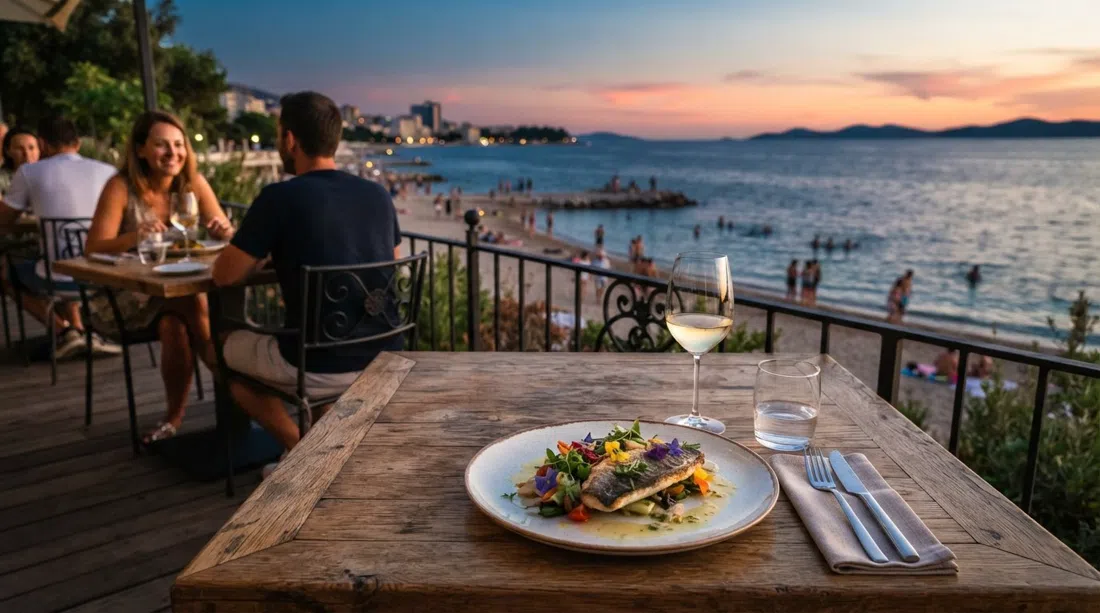
At the top end, Zora Bila is the showpiece. Tucked into the terraced complex directly above the beach, it has one of the best sea views in Split and a seasonal four- or six-course tasting menu from chefs Sandra and Dane Tahirovic. Gault&Millau has taken notice, which is fair enough, but the real argument for coming is simpler: this is where Bacvice stops being casual and becomes a proper dinner. It closes Mondays.
Going out
Bacvice is where Split goes when it is not quite ready to go home. The Old Town’s cellar bars may shut their doors around 2am, but out here the night keeps moving, and summer turns the beach pavilion into a small city of its own.
The anchor is Tropic Club, a big open-air terrace club built right on the sand. In peak summer, roughly June to September, it opens late and can run to around 4am or 5am, with one side pushing commercial house and EDM and another set aside as a calmer lounge with table service. It is the kind of place where the music is loud enough to flatten conversation and the crowd doesn’t seem to mind. That is the point.
Caffe-Club Bacvice, on Preradovicevo setaliste, is the long-standing beach-pavilion club listed by the city tourism board. It is a dependable late option, which in this part of town is code for “you will not be the first person to leave”.
La Playa Beach Bar & Club is more fluid. By day it is a cocktail terrace over the beach with light food; by night it turns into a party that runs until morning. The transformation is quick enough that you can almost feel the beach changing hands.
If you want a gentler gear, Fjaka is the smart move. It is a multi-level lounge bar, and the top floor catches the Adriatic views just right. Come for coffee and cocktails by day, house DJs by night, and use it as your sunset perch before the clubs fill up below.
For the daytime soul of the place, Zbirac is the one. It is a small detached terrace café-bar right on the sand, a local institution for coffee from 7am and for watching picigin without pretending you are doing anything else. Time Out has called it the best of the Bacvice bars, and that feels about right if your idea of a good bar is one where the sea does the heavy lifting.
Worth saying plainly: the Vanilla club that turns up on some lists is not here at all, but over by Poljud stadium. Bacvice has enough of its own noise without borrowing someone else’s.
Things to do
Swimming is the headline, and Bacvice makes it easy. The sandy bottom shelves so gradually that you can wade a long way out in warm, calm water, which is exactly why families and nervous swimmers like it. Loungers and umbrellas are rentable if you do not fancy staking a towel on the sand, though in July and August the place gets busy enough that the real luxury is simply finding a patch of shade and holding onto it.
Then there is picigin, which is both the beach’s signature and its best theatre. Even if you do not play, watching a good circle of regulars is worth the stop: the acrobatic dives, the impossible saves, the way the whole thing depends on cooperation rather than competition. Locals are welcoming. If you wade into the shallows near a friendly-looking group with a small ball, someone will usually wave you in. It is a game with a low barrier to entry and a high tolerance for embarrassment, which may be why it has lasted.
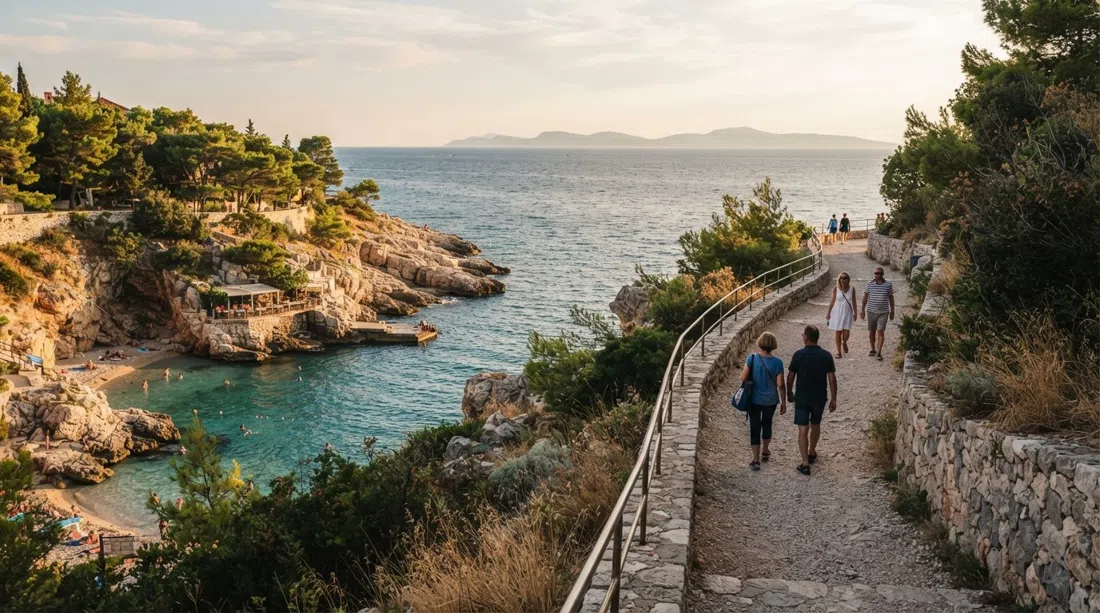
The best move after that is to walk east along the coastal path. In five or ten minutes you reach Ovcice, a quieter gravel-and-pebble cove locals use to dodge the Bacvice crowds. Keep going and you come to Firule, a second shallow sandy bay the locals nickname “mini Bacvice”, good for kids and usually calmer than the main beach. The path itself gives you open Adriatic views and the outline of the islands the whole way, which is a decent reward for not sitting still.
Shopping & markets
Bacvice is not a shopping neighbourhood, and that is part of the charm. The retail here runs to beach kit, sun cream, ice cream and swimwear from kiosks and small shops around the bay. Nobody comes to Bacvice to browse. They come to get wet, get fed, or get out late.
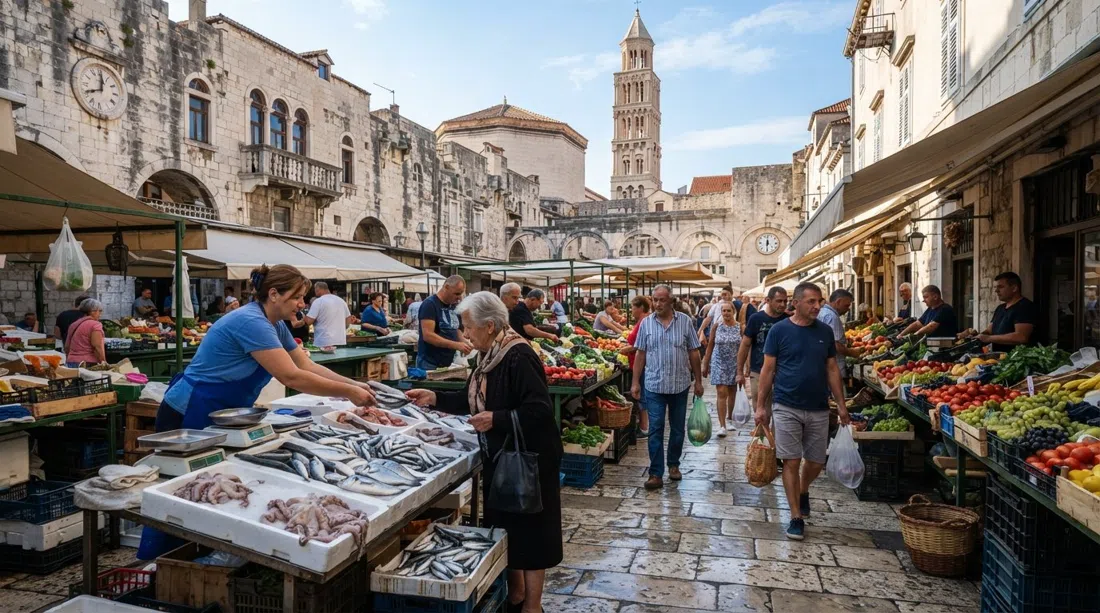
For the real market life, walk back towards the centre to the Pazar green market and the adjacent Ribarnica fish market on the eastern edge of Diocletian’s Palace. It is roughly ten minutes on foot, depending on how slowly you are moving and whether you stop for coffee first. Early morning is the time to go. The Adriatic catch is freshest then, and you will also find local cheese, olive oil and prosciutto changing hands while the stalls are still lively. By early afternoon, things wind down. That is the market’s way of telling you the day has already happened.
Where to stay in Bacvice
Bacvice is a smart base if your trip is built around beach and nightlife but you still want the Old Town on foot. The streets rising behind the bay hold modern hotels, boutique guesthouses and apartments, and they are generally a touch cheaper and roomier than sleeping inside the palace walls. That is the practical side. The other side is noise: rooms directly above the pavilion clubs can hear the DJ sets until the early hours in July and August, so if you sleep lightly, aim for the quieter residential streets uphill towards Firule and Lucac rather than a balcony over the beach bars.
Budget-wise, the area sits mid-range, with prices climbing steeply in peak summer. Book well ahead for July and August, because this is one of the most in-demand pockets in the city. It is a place that suits people who want to walk out for a swim in the morning, a meal at night, and the Old Town somewhere in between.
Getting around
Bacvice is walkable to almost everything that matters. It is roughly a ten- to fifteen-minute stroll along the waterfront from Diocletian’s Palace and the Riva promenade, heading east past the ferry port. It also sits about 500 metres from Split’s main bus station and the ferry terminal, which makes it genuinely handy if you are arriving by coach or catching a catamaran to Hvar or Brac. Local buses stop nearby — line 21 has a stop right by the beach — but most people just walk unless the heat is doing its usual work on the legs.
The coastal path east links you to Ovcice and Firule in five to ten minutes, so once you are here you can move between beaches without much thought. For the airport, Split Airport is about 25km west near Trogir, roughly 30 to 40 minutes by car or airport shuttle depending on summer traffic. That is the practical geography of the place: close enough to everything, noisy enough at night, and simple enough that you do not need to overthink it.
Bacvice works because it is not trying to be elegant. It is a sandy bay in a city that mostly runs on stone and pebble, a beach where children paddle beside picigin regulars, and a late-night strip that keeps the pulse going after the Old Town has gone quiet. Some places in Split are for looking at. Bacvice is for using.