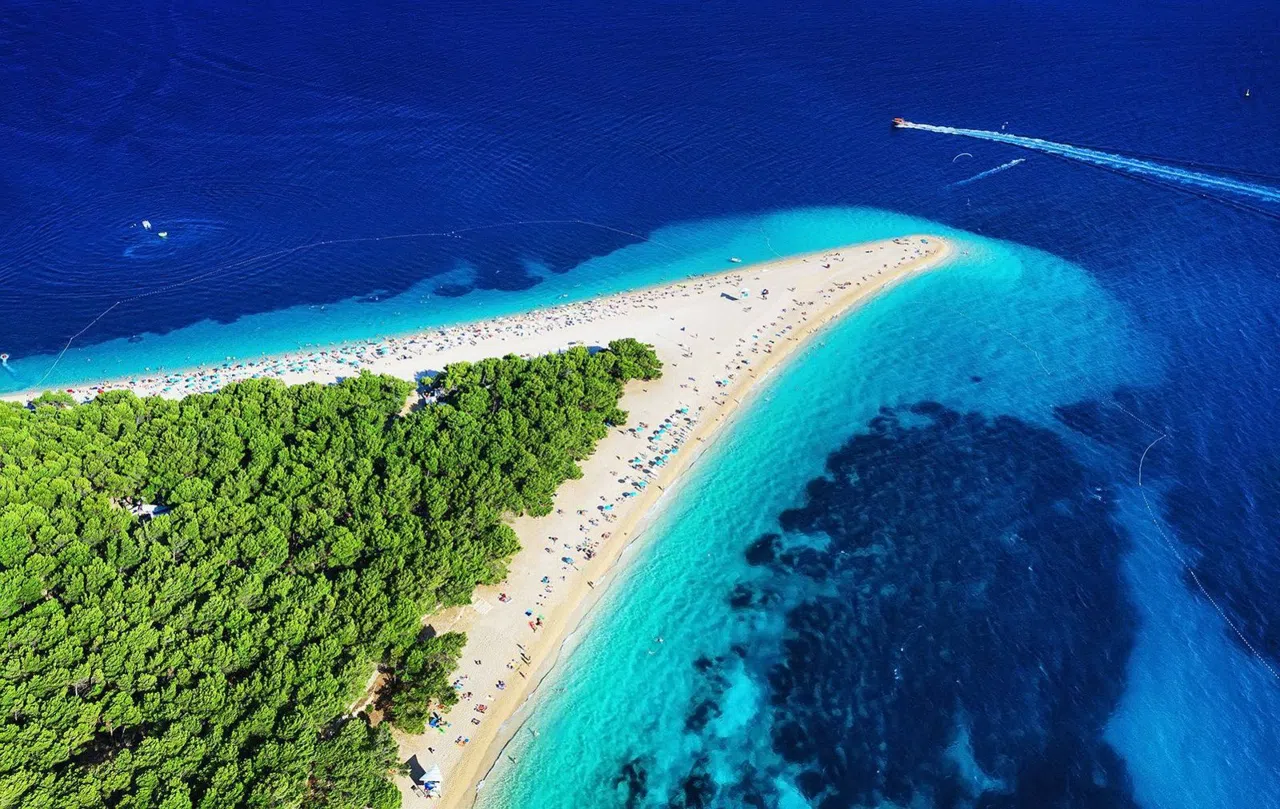
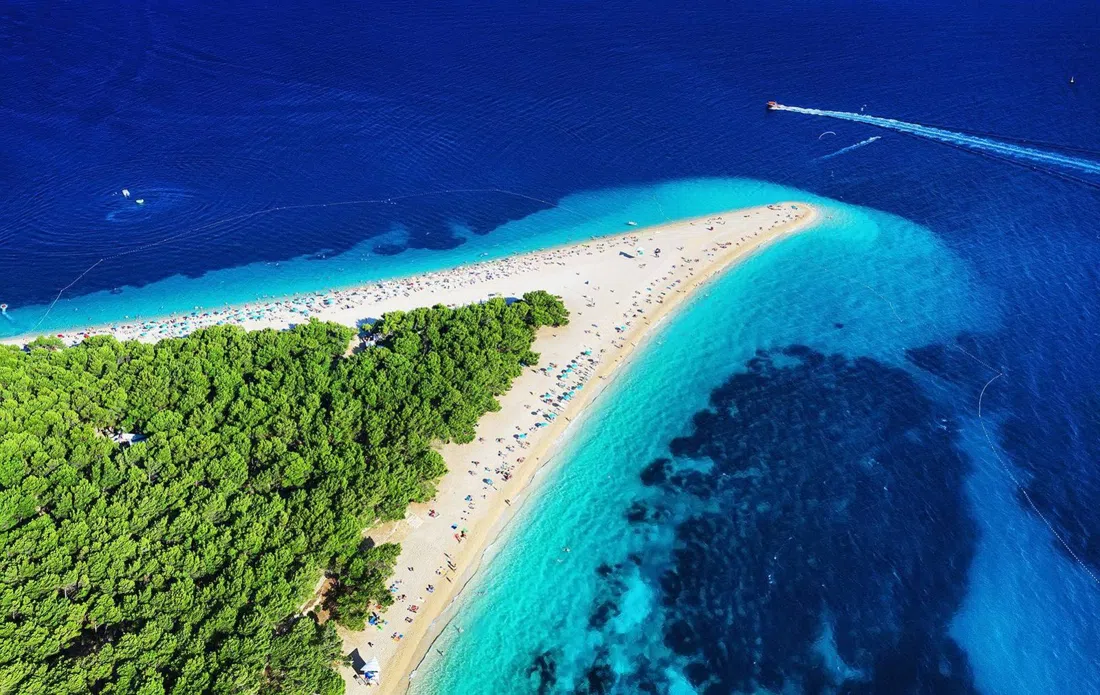
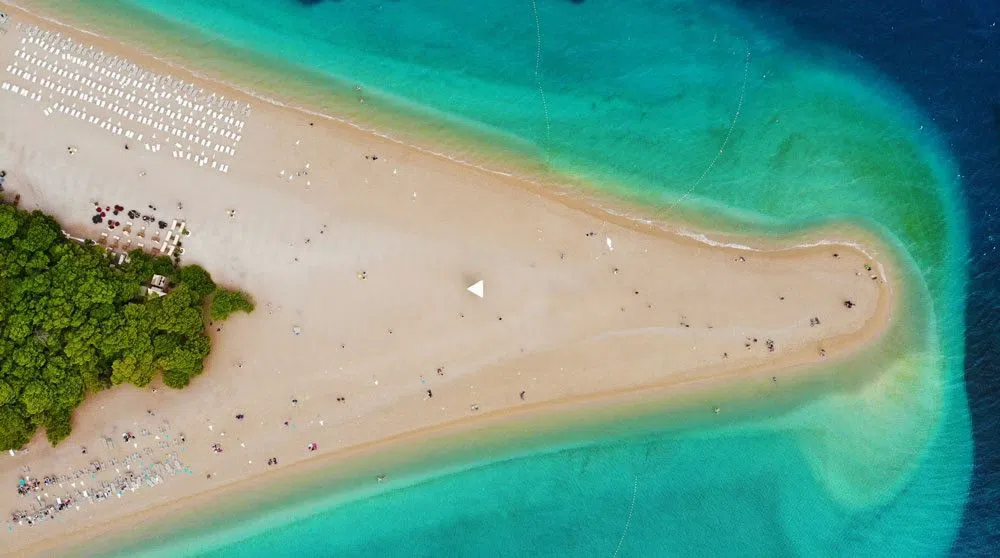
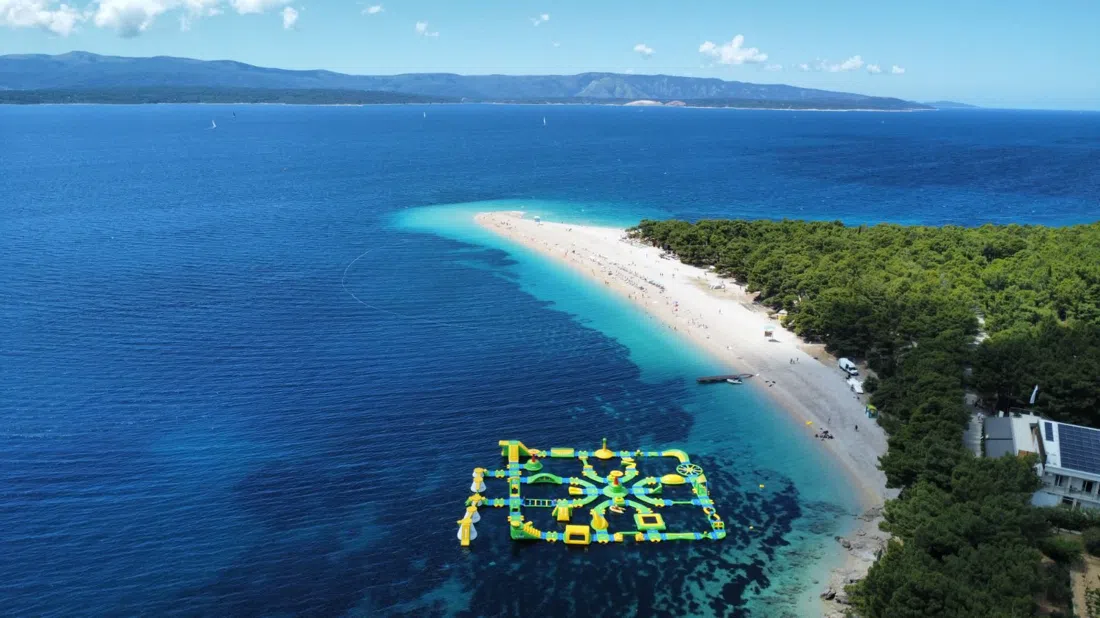
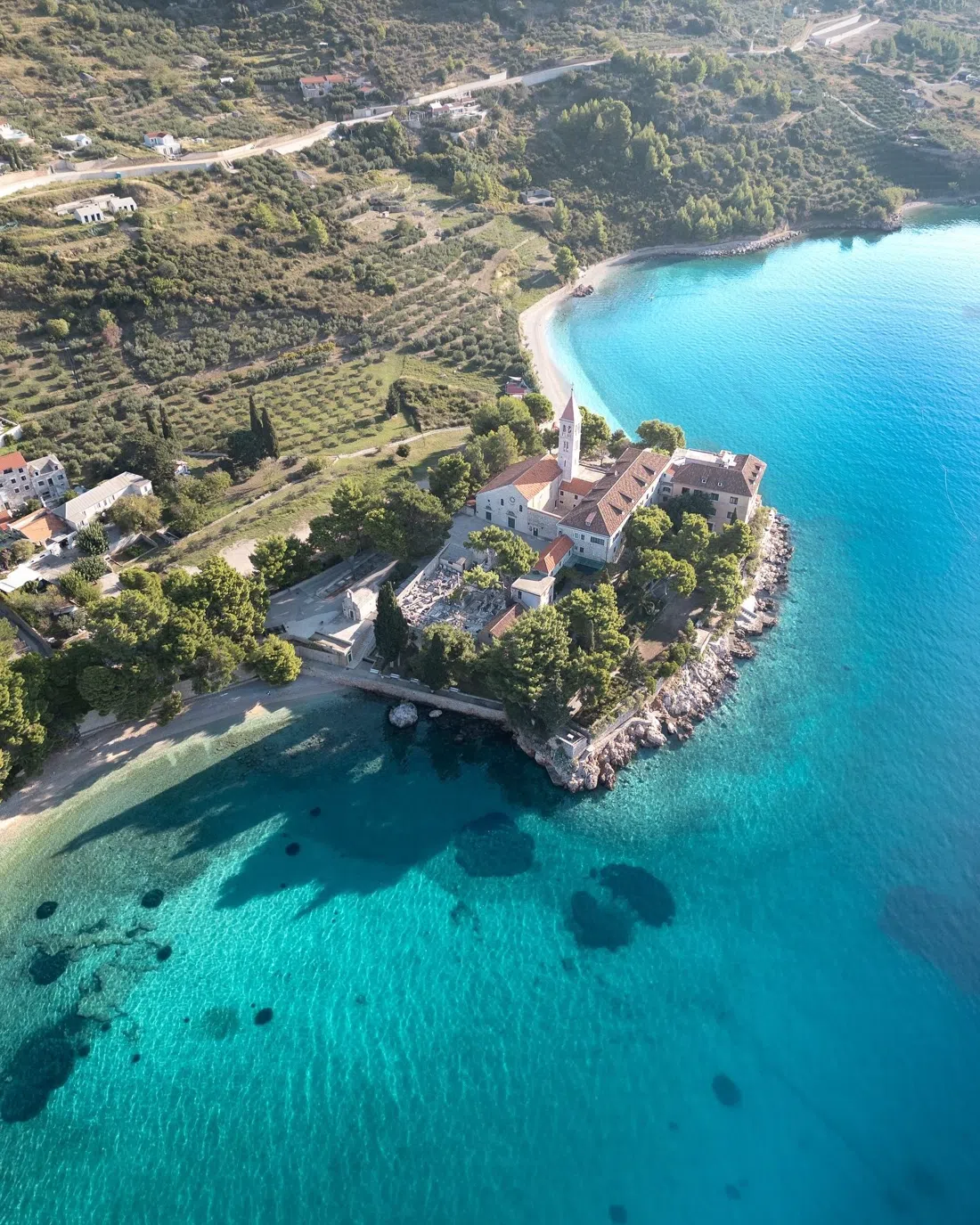
The photographs never warn you that the beach moves. Zlatni Rat Beach (Golden Horn) (Bol, on the south coast of the island of Brač) is a half-kilometre spit of pale pebble thrown out into open water, and its tip pivots east or west depending on what the wind and the current have been doing that week. Arrive on a glassy morning and it points one way; come back after three days of hard afternoon wind and the whole tip has swung across. No two visits, and no two honest photographs, look quite the same.
Where the Golden Horn actually is
First, the correction that saves people a wasted morning. Zlatni Rat is not in Split. It lies at Bol, on the island of Brač, roughly an hour away by catamaran, and there is no road, bridge or taxi that will get you there from the mainland. The shape of the trip is therefore fixed: you sleep in the city and you cross the water for the day. The fast boats go from the city harbour, the crossing is short enough that children tolerate it, and you are back on the mainland for dinner. If you are still choosing where to stay, the Split hotel search covers the harbour-side rooms that make an 08:00 sailing easy to reach. Timetables are seasonal and thin out sharply outside the summer months, so check the day you actually intend to travel rather than a schedule you read in winter.
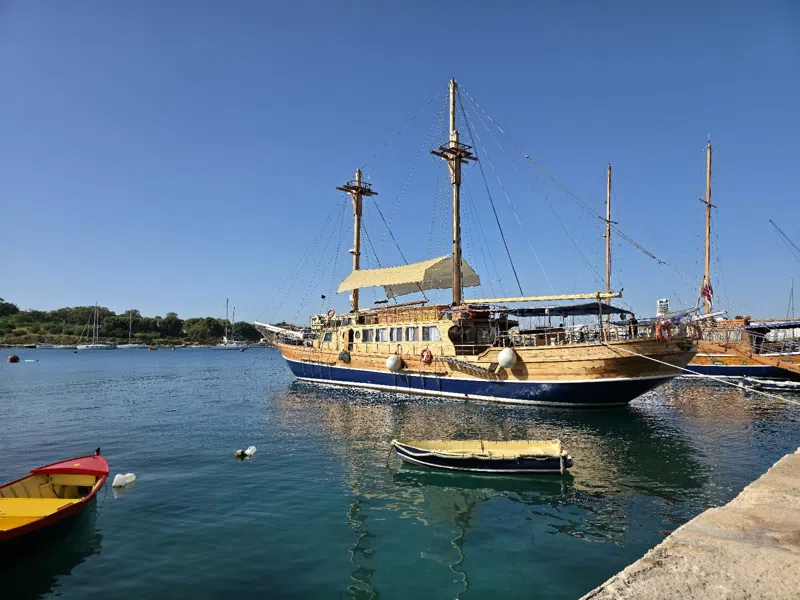
The alternative is to go by boat tour, which is what a large share of visitors do, and it changes the day in one specific way: you arrive at the western landing, on the water, rather than walking in along the promenade. Private and small-group boats here run seven days a week, prices start from around 395 USD per person for the private end of the market, and there are 544 traveller reviews across the bookable options, with the top-rated one sitting at 4.9 out of 5 from 346 reviews. A boat is worth the money if you want several stops in a day and no timetable anxiety. If all you want is the beach, the scheduled catamaran plus a walk does the same job for a fraction of it.
What you actually see and do there
The spit runs out perpendicular to the shore, a low spine of pines down the middle and water on both flanks. That geometry is the whole point. One side is always the sheltered side and one side is always taking the wind, so you choose your flank by mood: flat, warm and family-tolerable on the lee, choppy and lively on the windward edge, with the sailboards going past. Walking out to the very tip and back takes fifteen minutes at a stroll, and it is worth doing at least once, because standing on a few metres of pebble with sea in every direction is an odd sensation you do not get on an ordinary bay beach.
The surface deserves a warning. This is pebble, not sand: smooth, sun-hot by midday, and hard on soft feet at the waterline. Beach shoes decide whether you wade in confidently or hobble, so pack them. The water shelves quickly on the flanks and is exceptionally clear, which is the other thing photographs undersell.
Three to four hours covers the beach properly, including a swim, the walk to the tip and a drink. With the crossing from the mainland on either end, treat it as a full day out and do not try to bolt anything ambitious onto it unless you have wheels.
The walk in, and the little train
The approach is half the experience. Bol Riva and the pine promenade to Zlatni Rat (Bol's waterfront, from the harbour westward) is a 20 to 30 minute walk each way under pines, past cafés, surf schools and a string of small swimming coves that most people stride straight past on the way to the famous one. Some of those coves are better for an hour's quiet swim than the spit itself. The promenade narrows in places at peak hours, so a large walking group will end up strung out single file rather than ambling four abreast.
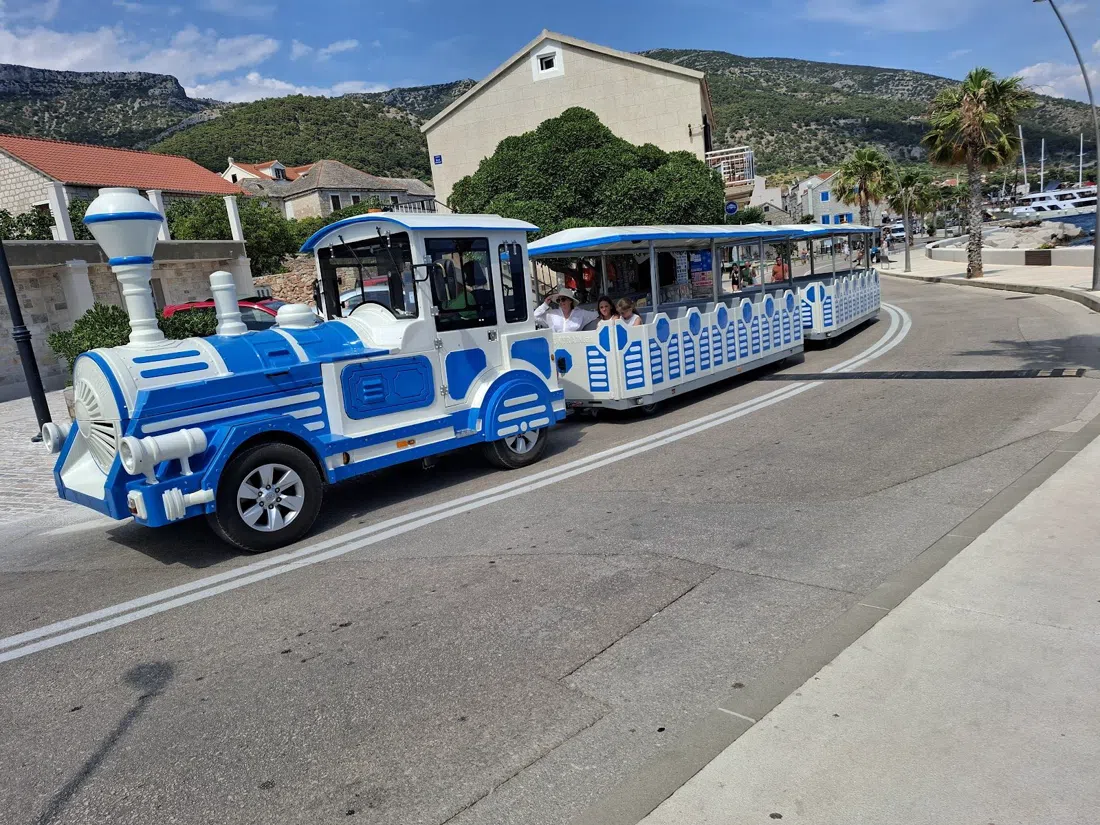
When the walk is not realistic, take the Ferata Bol tourist train (from the harbour area), which runs roughly every 30 minutes in season, around May to September, at about €4 one way and €6 return, with no reservation. You simply board. Nobody needs to feel sheepish about taking it. With a buggy, a bad knee, small children at the end of a long day, or 40 minutes until your catamaran, the train is the sensible choice. In August heat, twenty-five minutes of promenade is a real walk.
What it costs to stand on the beach
Nothing. There is no gate, no ticket office and no entry fee, and that holds for any size of group: boat parties come ashore at the western landing, everyone else walks or rides in from the promenade. What you pay for is comfort. A sunbed runs roughly €10 to €15 for the day, an umbrella around €5 to €10, and if you have driven, parking is in the region of €3 to €5 an hour. Two sunbeds and an umbrella for a day is therefore in the €25 to €40 range before you have bought a drink.
Because entry is free, there is no ticket queue to beat, which reframes the whole question of booking ahead. What sells out is transport and seats: the boats, the loungers in the best row, and the good tables at dinner. Book the crossing and the restaurant, and do not waste money on anything claiming to be a skip-the-line pass for a public beach.
The view that justifies hiring a car
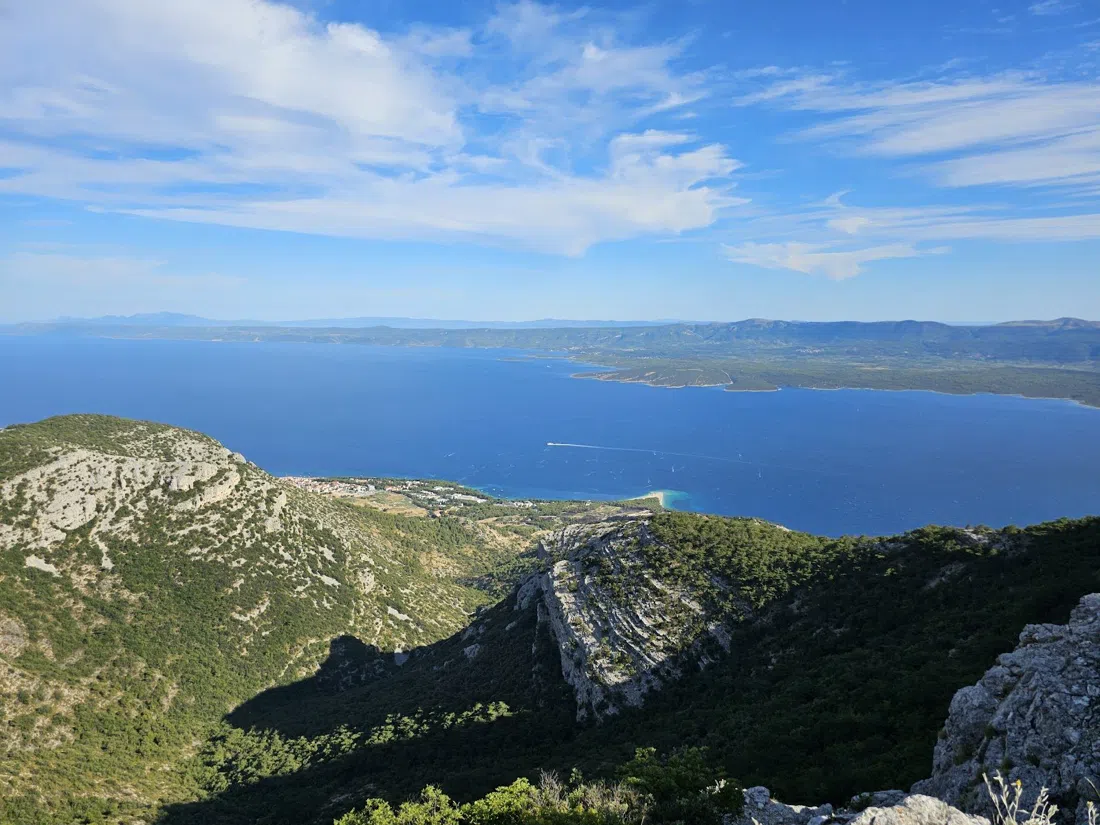
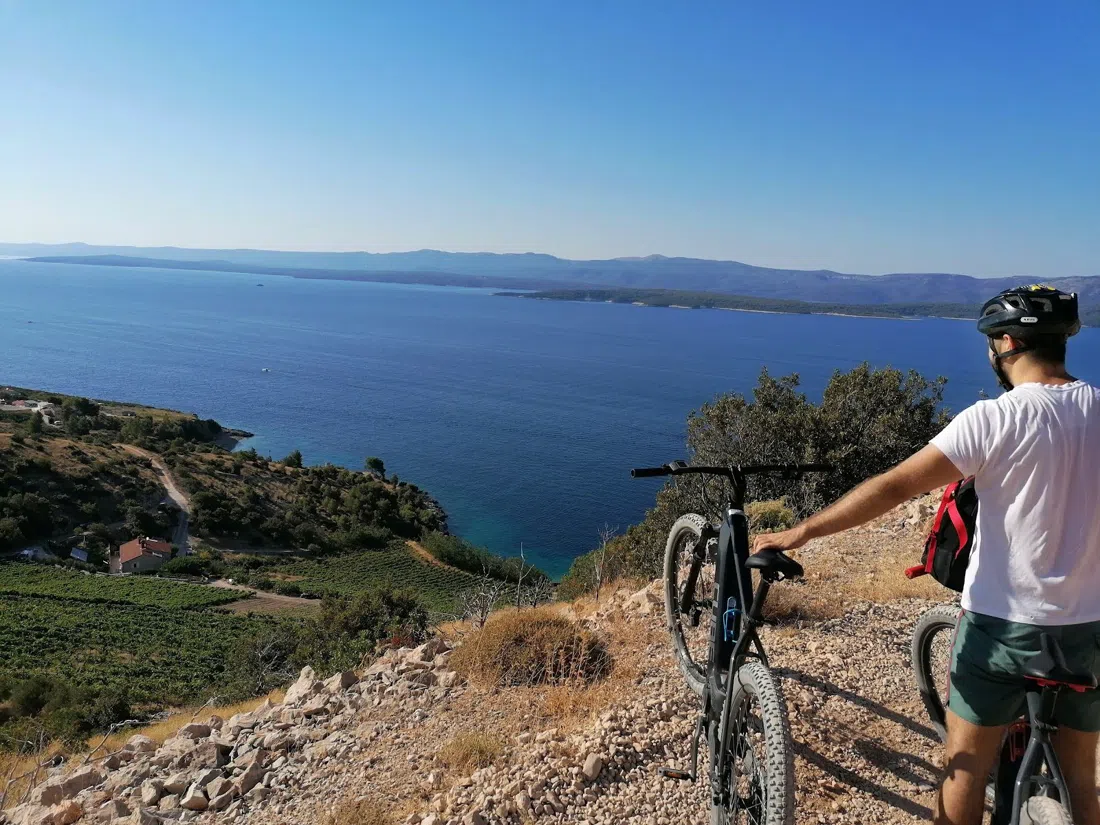
Everyone has seen the aerial photograph of the horn. You can stand where it was taken. Vidova Gora (the summit above Bol) is free, unstaffed and has a large car park near the top, so minibuses and private tours handle it easily; from the car park it is a short walk to the edge. It is around 30 minutes by car from Bol, or a serious two to three hour hike up from the town if you would rather earn it. This is the highest point on any Adriatic island, and it is the best argument for hiring a car or taking a private tour instead of ferrying in for the sand and ferrying out again. Go in the morning for cleaner light and less haze over the channel, and take a layer, because it is markedly cooler and windier up there than on the beach.
Wind, boards and the afternoon Maestral
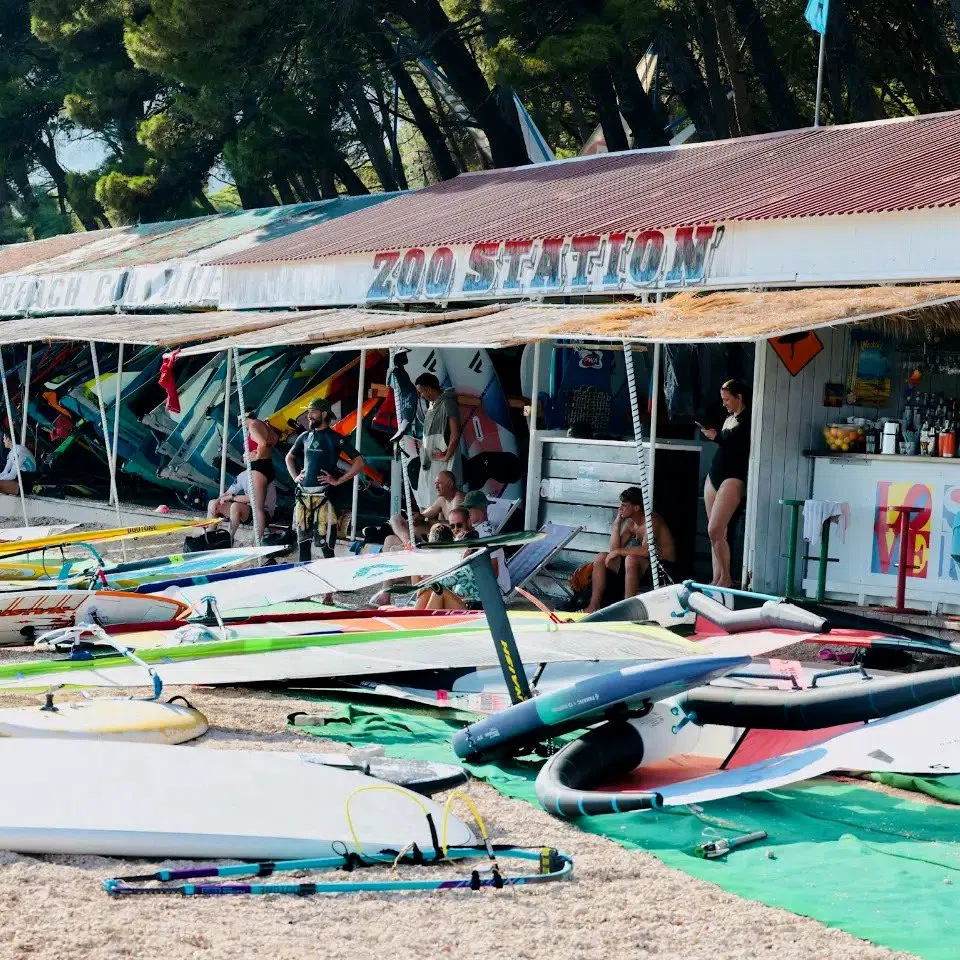
Bol is a windsurfing name for a reason, and the reason is a reliable afternoon wind that funnels down the channel most summer days. Big Blue Sport (near the town centre, about 100 metres from the beach) has been working this stretch of water for over 35 years and is set up for courses and groups: windsurf lessons from around €67 for a two-hour session, plus board, SUP, sea kayak and mountain bike hire by the hour or the day, with a shop and café attached. Zoo Station Bol (same stretch of water) is the alternative and the one to choose if you specifically want to foil: beginner courses on the light morning wind from 10:00, progression sessions in the stronger afternoon breeze, open 10:00 to 20:00 in season, with lessons and rental typically €50 to €90 per session depending on discipline. They are genuinely different operators with different specialisms, so pick on what you want to learn rather than on whichever sign you see first.
For families, the answer to a restless afternoon is Aquapark Bol (inflatable course in the water off the beach): timed sessions, life jackets included, staff supervised, roughly €10 to €15 a session. It is the one thing that keeps six-to-fourteen-year-olds interested once the novelty of pebbles has worn off, which takes about an hour. It is seasonal and only in the water in the summer months, so confirm it is actually there before you promise it to a child.
Eating and drinking within reach of the sand
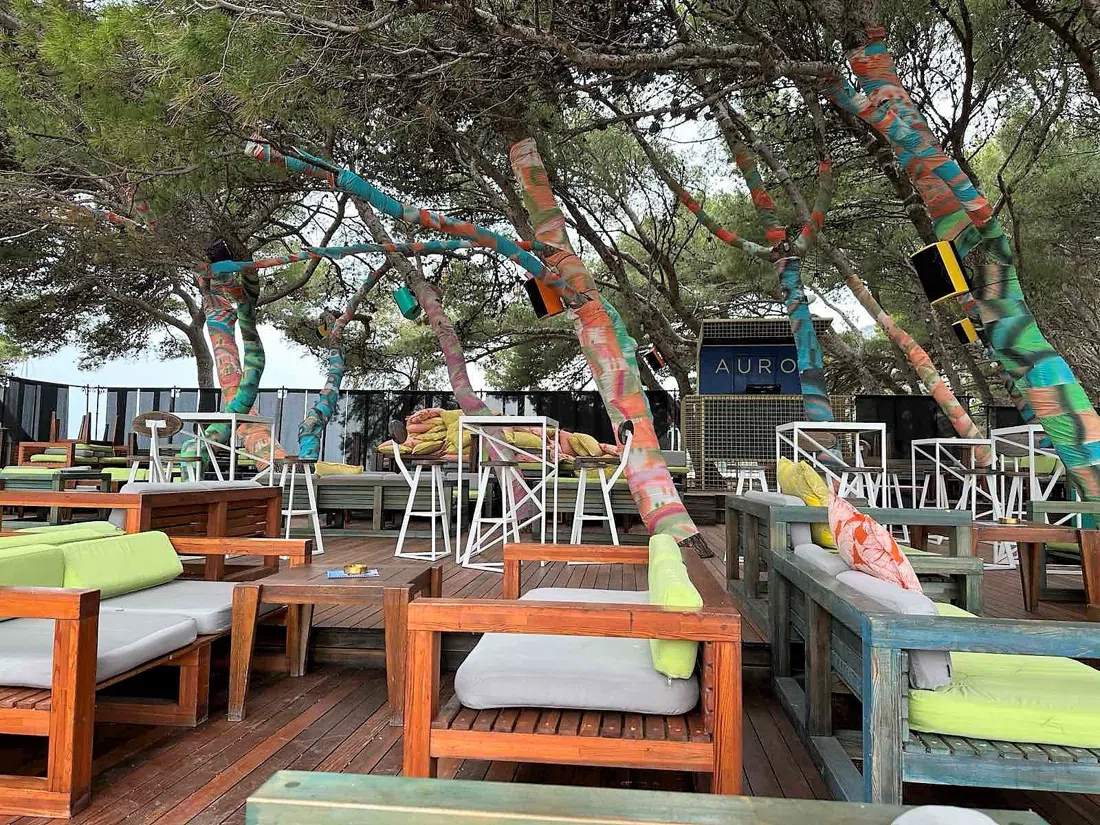
Auro Beach Bar (on the neck of the spit) is the natural late-afternoon anchor: a walk-in beach bar with no door policy, cocktails roughly €9 to €14, coffee and soft drinks cheap, and a terrace positioned so you can see both sides of the horn at once. It takes groups without fuss and fills up for sunset.
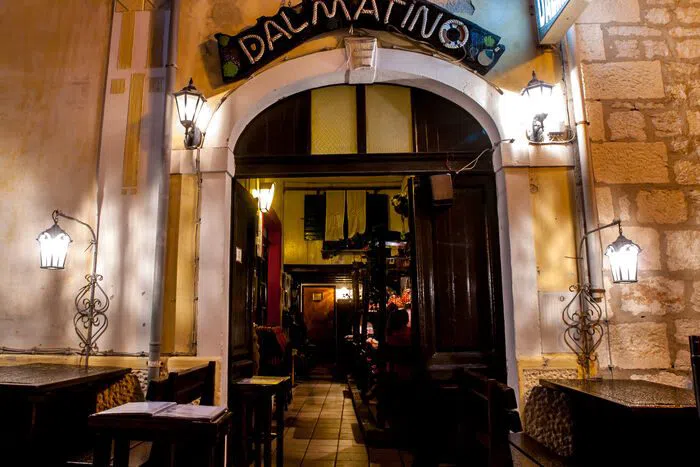
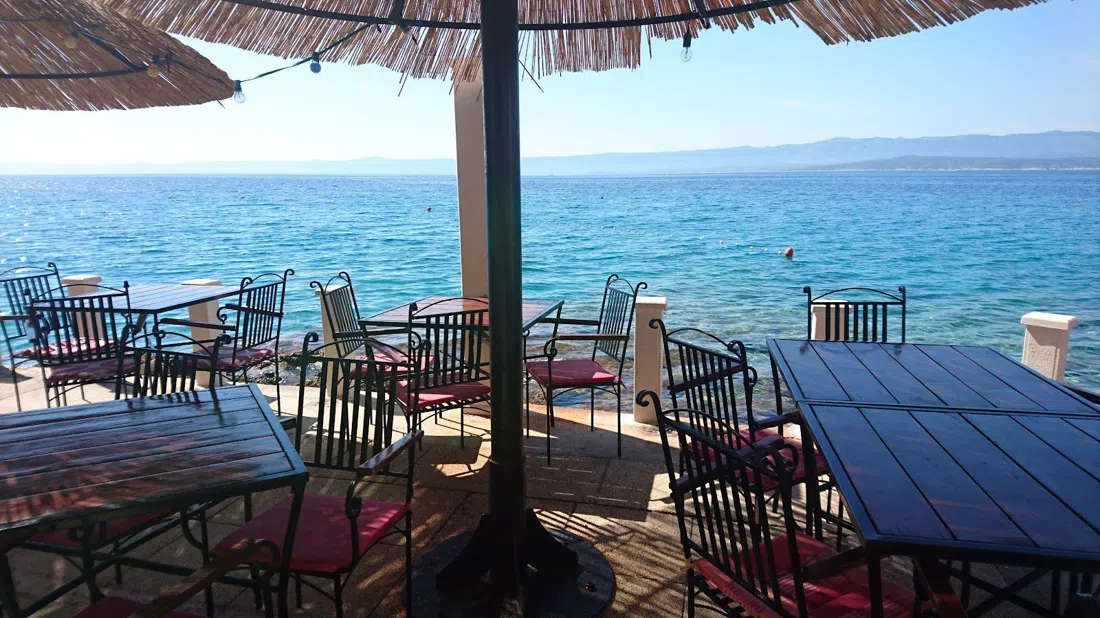
For dinner, Ribarska Kućica (Bol seafront) has arguably the best-sited table in town, built where fishermen once salted the catch, and it is where locals send you for gregada fish stew, octopus salad and seafood tagliatelle. Mains run roughly €20 to €35 with whole fish by the kilo. Reserve on +385 21 635 376, and treat that as essential at weekends and in peak season, because the terrace is tight and takes only medium groups. Konoba Dalmatino (Bol town) is the dependable all-day alternative, open roughly 09:00 to midnight, which matters because it covers the awkward mid-afternoon gap when most kitchens here are shut. Mains are roughly €15 to €30; peka must be ordered hours ahead on +385 91 545 5779, which suits a group that has planned its day.
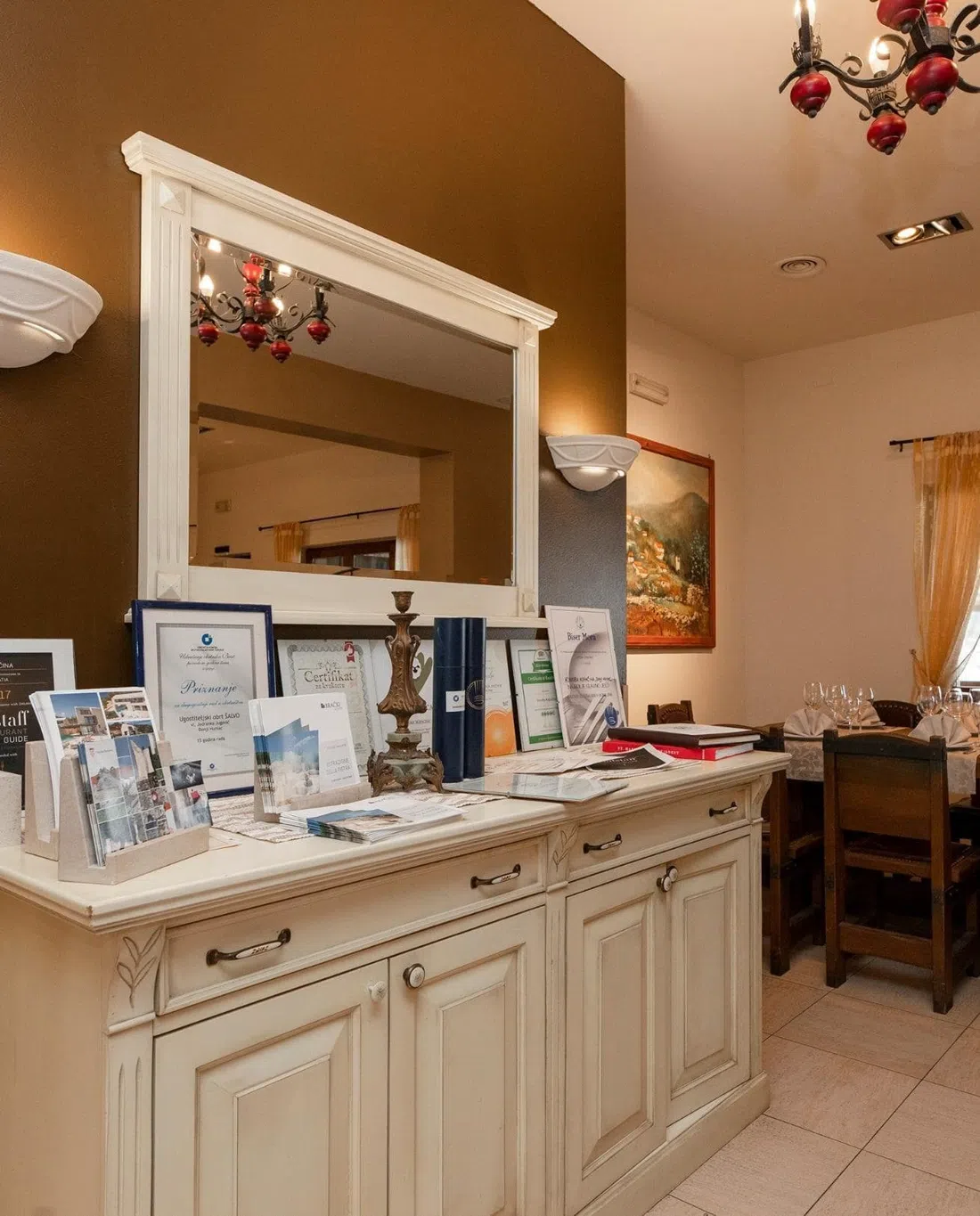
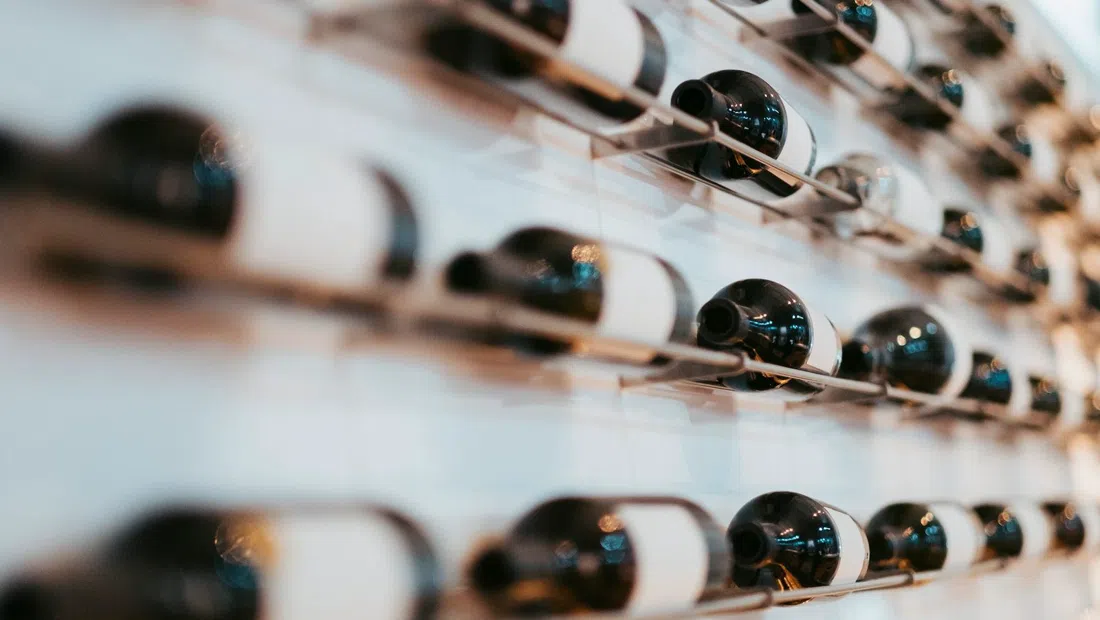
If you have a car or a private driver, Konoba Kopačina (inland, about 25 minutes from Bol) is the island's benchmark for lamb, spit-roasted, sold by the kilo and tasting of the wild sage the sheep graze on, with big dining rooms built for groups and mains around €18 to €30. Book ahead. It belongs in your day as a tour lunch stop rather than a walk-in after the beach. And Stina Winery (Bol harbour, about 50 metres from where the catamaran ties up) is the obvious first or last stop of a day trip: structured tastings of two to four wines with cold snacks, roughly €20 to €40 a head, pouring indigenous Pošip, Vugava and Opol rather than international varieties. There is a proper tasting room built for sommeliers and larger parties alongside the open waterfront tables, so book the room in advance if there are more than a few of you.
When the beach is not enough
The counter to "Bol is just a beach" is a short walk from it. Branislav Dešković Art Gallery (Bol waterfront) holds over 400 works and the most serious collection of 20th-century Croatian painting and sculpture on any Adriatic island. Adults €5, students €3, children to 14 €2, closed Mondays, and the rooms are small historic palace spaces best suited to groups under about 15. It is also the rain plan.
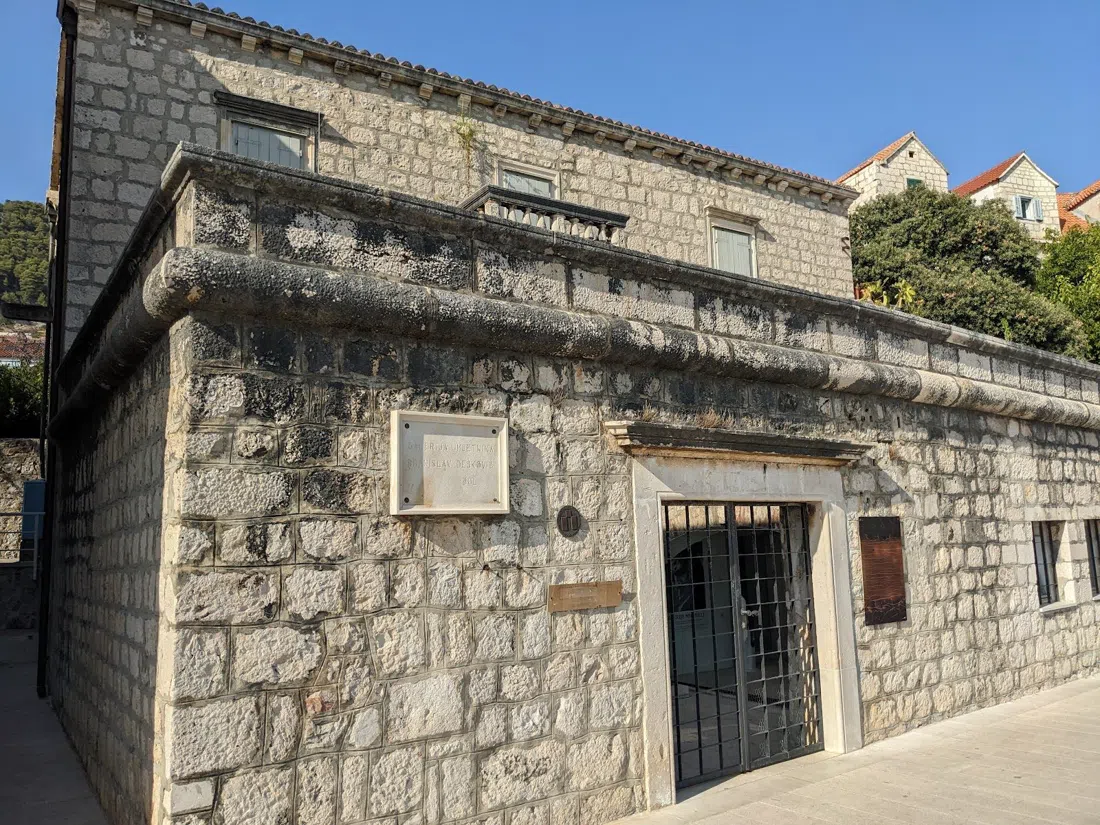
Dominican Monastery and Museum, Bol (clifftop at the eastern edge of town) is worth the walk for the position alone. Three small floors, entry around €2 to €3, a Madonna with Child and Saints attributed to Tintoretto, and an archaeological and numismatic collection; it was renovated in 2021. It closes over the midday break, so time it deliberately, call +385 21 642029 if you are bringing a party, and split a coach group rather than arriving as one.
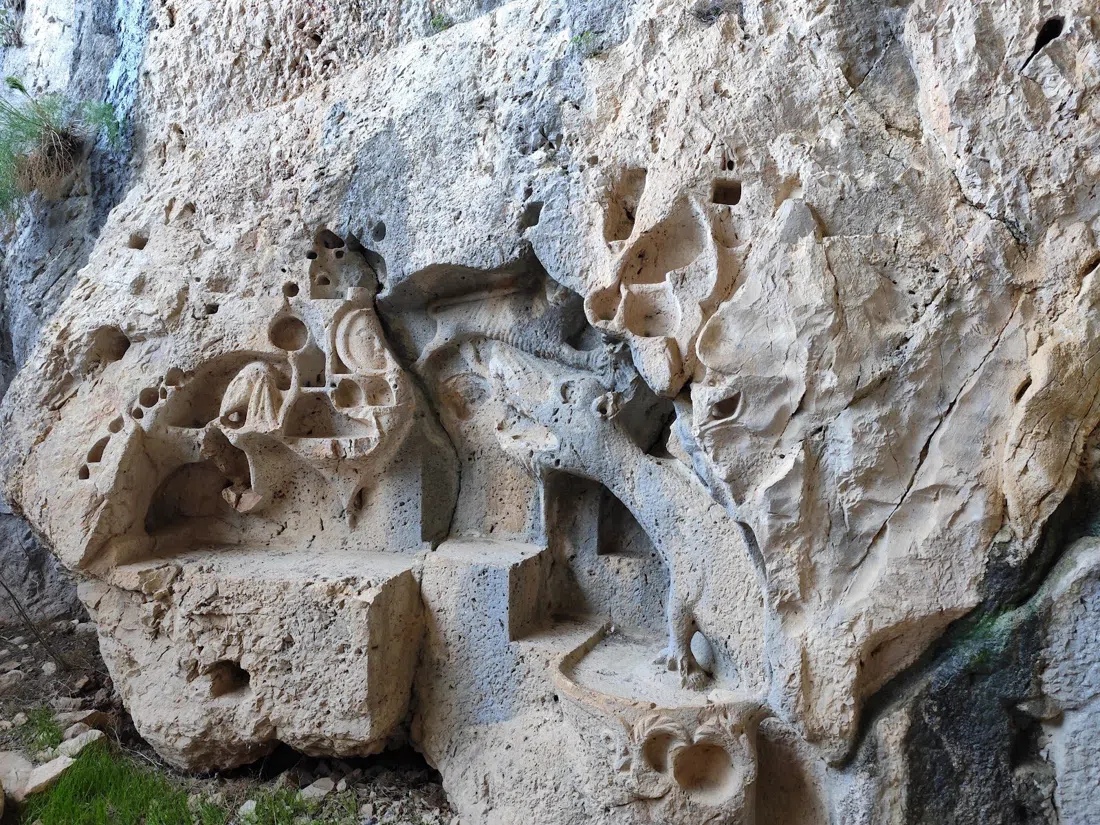
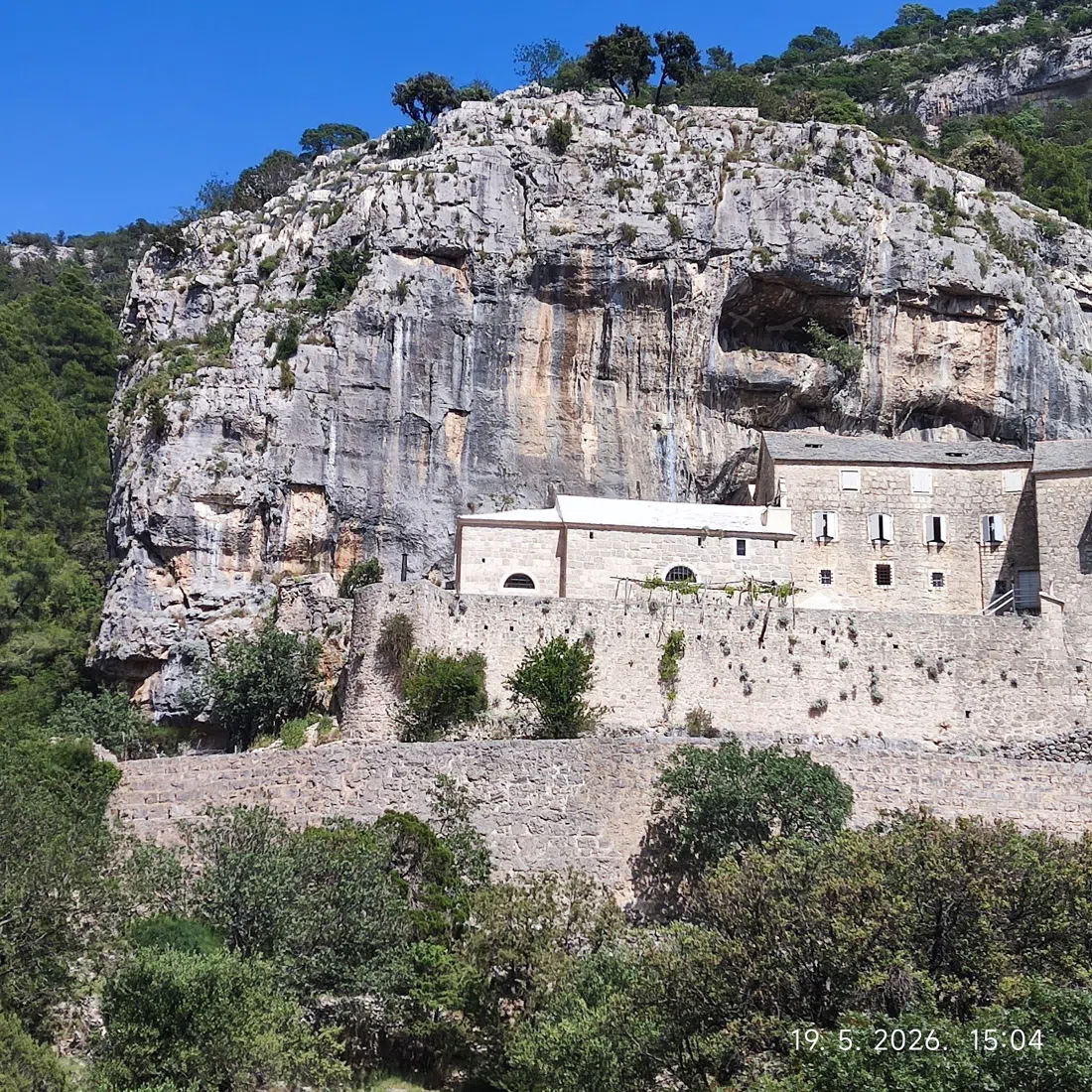
Two things reward real effort. Blaca Hermitage (Pustinja Blaca) (western Brač) was founded by Glagolitic priests in the 16th century and is one of the strangest places in Dalmatia, reached only on foot: a proper hike in, or a boat drop at the cove below and then an uphill walk. Open daily except Mondays; 16 June to 15 September 09:00 to 17:00 with last entry 16:30, and 16 September to 14 June 09:00 to 15:00 with last entry 14:30. Adults €8, children to 14 €2. There is no food or water on site. Fit visitors only, and carry more water than you think you need. Dragon's Cave, Murvica (Zmajeva Špilja) (Murvica, about 2 km west of Bol) is locked, and entry is only with the local guide Zoran on +385 91 514 9787, in English or German, booked ahead. Small groups, a steep 40 to 60 minute climb from the village, roughly €15 to €25 a person. The carvings inside were cut by Glagolitic monks and are still not fully explained. It is unlike anything else on the island.
Best time to go
Morning is for the water and the view; afternoon is for the wind. If you want the beach calm and the sea like glass, be on it before about 11:00, which is also when the light on the spit is at its cleanest and before the day boats land. From early afternoon the Maestral builds down the channel, which is excellent news if you are on a board and less so if you wanted flat water and an undisturbed umbrella. Late afternoon, once the day-trippers have gone back to their boats, the beach quietly empties and the bar on the neck of the spit becomes the best seat in town.
By season, the shoulder months either side of high summer are the best bet: warm enough to swim, sailings still running, and the promenade wide enough to walk two abreast. Deep summer gives you guaranteed heat, the inflatable park in the water and every operator open, at the price of crowds and a hot walk in. Out of season you will have the spit almost to yourself, but the tourist train stops, sailings thin out and some of the beach concessions close. Two scheduling traps worth writing down: the art gallery and the hermitage are both closed on Mondays, and the monastery museum shuts over the middle of the day.
Is it worth it
Yes, with one condition. If you cross the water, look at the beach for an hour, buy a coffee and get back on the boat, you will wonder what the fuss was about, because at eye level it is a handsome pebble spit and no more. What makes it worth a full day is the combination: the view from the summit that shows you the shape you came for, the walk in along the pines, the wind in the afternoon and a proper dinner in town afterwards. Do two or three of those and it is one of the better days you will have from the city.
It suits couples who like a long lunch and a walk, families with children old enough for the water park, and anyone who has ever wanted to try a sailboard with a reliable afternoon breeze and a school that has been teaching on the same water for decades. It suits large coach groups less well: the beach itself absorbs any number of people, but the good restaurants, the gallery and the monastery museum do not, and they will need splitting. It is a poor choice for anyone who needs flat, soft sand and shade on demand.
Practical notes
Transport is simple enough. The catamaran from the city harbour takes roughly an hour on a seasonal timetable, so book the return in advance in summer and build in slack, because the walk or train from the beach back to the harbour takes 20 to 30 minutes. On the island, the tourist train covers the promenade in season; everything beyond the town, including the summit and the inland lamb, needs a car, a taxi or a private driver. A boat tour bundles the crossing and the day into one booking and runs seven days a week, which is the argument for it if your dates are tight.
On money, Croatia uses the euro. Cards are normal in restaurants, wineries and shops, but carry €30 to €50 in small notes for sunbeds, the tourist train, parking and the cave guide. Nothing on the beach is expensive on its own; it is the accumulation that surprises people.
For timing, take the first boat out and the last boat but one back. Cover the summit before the beach if you have a car, eat late, and do not plan the hermitage on the same day as a beach afternoon unless you are genuinely fit.
On budget, a lean day is the return crossing plus a swim, water and a sandwich. A comfortable day is roughly €25 to €40 for two sunbeds and an umbrella, €20 to €40 a head for a wine tasting by the harbour, and €20 to €35 a head for dinner on the seafront. A windsurf lesson adds from around €67. Private boats start from 395 USD per person and cover the whole day rather than just the crossing.
For what else to do with your time on the mainland side of the trip, the Split guide covers the city itself.