The Split issue
Following Torcida Through Split on a Hajduk Matchday
Split's terrace culture predates most of Europe's ultras groups and grew out of the city's working-class, anti-fascist past. Here is how to see it properly, from Poljud to the third-half bars, without turning it into a spectacle.
By Rasmus HoltCity breaks, sights and day trips around Split
The singing on the north terrace at Poljud starts well before kickoff and does not depend on the score, which tells you most of what you need to know about it. Split conducts its arguments in the open (at the fish market, over coffee, waist-deep in the water at Bačvice), and Hajduk is where that habit gets organised into something close to a liturgy. A stadium tour will show you the trophy cabinet. What follows is about the city the terrace grew out of, and how to stand in it as a guest rather than a spectator.
A club named after outlaws
Hajduk was founded in 1911 by a group of Split students, and they chose the name deliberately. A hajduk was an outlaw, one of the men who took to the hills rather than live quietly under foreign administration. It was a provocative name for a football club in a city that had been governed from somewhere else for most of its recorded history, and the club has spent a century behaving as though it meant it.
The part that matters for understanding the terrace comes in the 1940s. Under wartime occupation the club was invited to carry on under a new flag and refused, dissolving instead. It reformed in 1944 under the partisan movement and spent the rest of the war playing exhibition matches for Allied troops around the Mediterranean, then turned down an offer to become the armed forces' official club and came home to Split. So the anti-fascist streak you hear on the north stand is club history rather than a modern political adoption grafted onto a football crowd, and locals will correct you briskly if you suggest otherwise.

You can stand on the physical evidence. Stadion Stari plac (Firule, a fifteen-minute walk east of the Riva and slightly inland from the Bačvice bay) was Hajduk's home until the football moved out in 1979. It is now the ground of the rugby club RK Nada, and it sits wedged into the housing rather than parked on ring-road wasteland the way modern stadiums are. Apartment balconies overlook the pitch, and the neighbourhood presses right up against the touchline. It is free to walk up to and look at; nobody ticket-checks a stroll. Rugby matchdays cost a few euros and are informal to the point of being loose. Come here first and the rest of the story makes sense: this was a club embedded in a working district, not a franchise dropped onto a city.
Plan your Split trip
Live prices from our booking partners.
Free cancellation on many rooms. We may earn a commission when you book.
The oldest organised terrace in Europe
Torcida was founded on 28 October 1950 by students who had followed that year's World Cup in Brazil and wanted the same noise on a Dalmatian hillside. That founding date makes it the oldest organised supporters' group in Europe, older than the Italian ultras movements it is usually lumped in with, and the group has never quite stopped behaving like a student experiment that got serious: self-organised, suspicious of authority, funded by its own members.
Klub navijača Hajduka Torcida Split (Poljud, close to the stadium) is the members' organisation and its shop. It is not an attraction. There are no tours, no visitor programme, and no interest in being photographed. Members are not exhibits, and if you want a picture of anything beyond the merchandise, ask first and accept a no. What you can legitimately do is buy something. Scarves, tees and patches run roughly €10–40, and the money goes into away travel, tifo materials and legal costs, which is the honest way for a visitor to touch this scene, because it puts you on the paying side of it rather than the gawping side. A small group in the shop is fine. A coach party is not.

The same holds for everything else in this piece. The terrace is not putting on a show for you. It does what it does every fortnight, and you are welcome to stand near it.
Poljud and what the tour leaves out

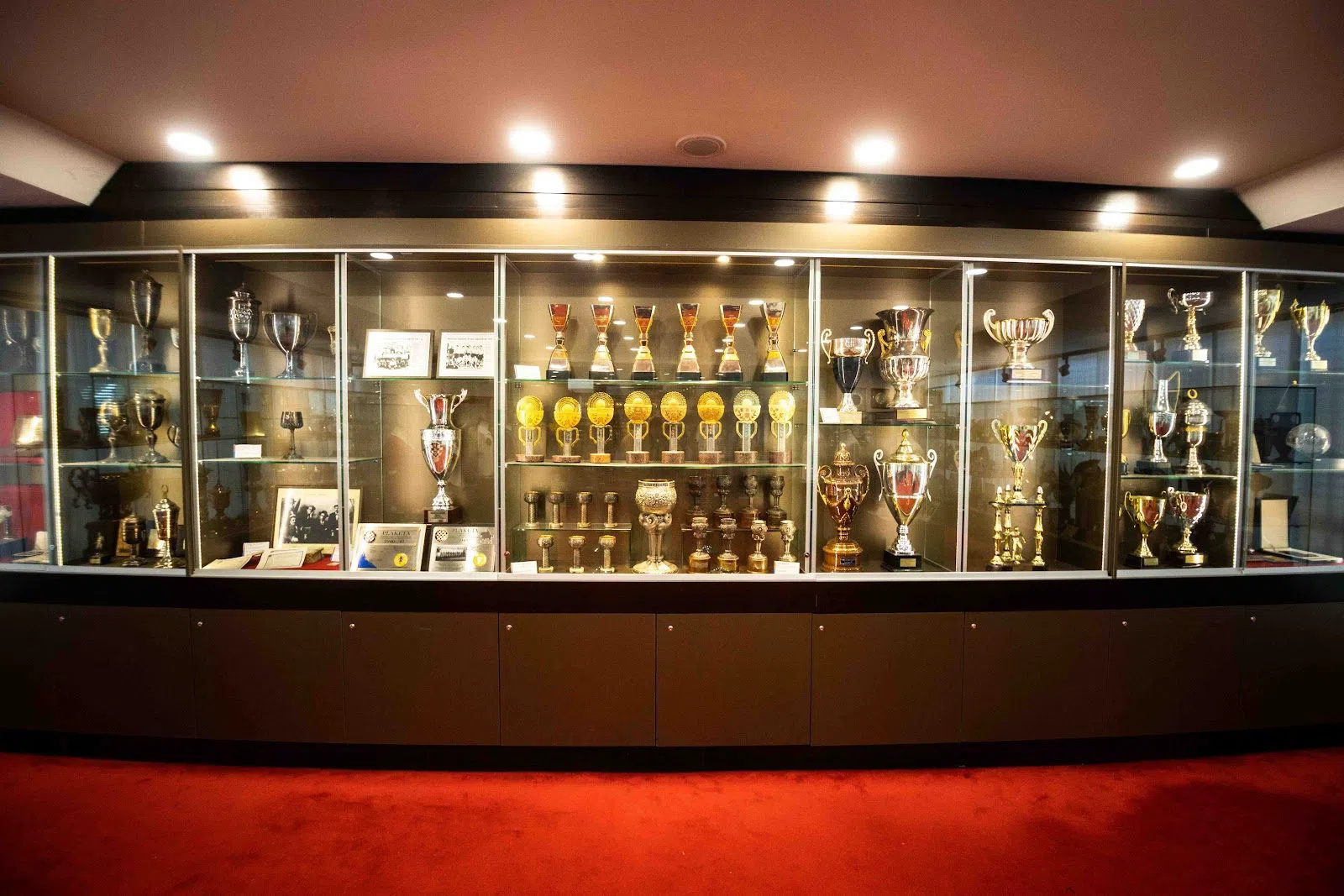
Stadion Poljud (Poljud, roughly a twenty-five-minute walk north-west along the water from the Riva, or a short local bus ride) holds 34,183 and is the only piece of genuinely great modern architecture in Split, a low white shell that opened in 1979 and still looks like it arrived from a more optimistic decade. The Hajduk Split Stadium Tour & Museum runs 30–45 minutes and costs about €10–15 a head. Book ahead, and expect the schedule to shift week to week around training sessions and fixtures. If the squad is working, pitch and trophy-room access are not guaranteed and nobody will offer you a refund for the disappointment.
Take it for what it is: the club's own account of itself, the silverware, the framed shirts, the official version. It is a decent opening chapter and a poor whole story, because the interesting half of Hajduk is not in any display case. It is in the bars around the ground, and in the way a taxi driver's mood changes when you mention the result. Do the tour early in your stay and treat it as orientation.
If you would rather have the stadium stitched into the city than served as a standalone stop, Given2Fly Adventures runs a Bike, Beer & Poljud Stadium Tour (city-centre meeting point, cycling out to the ground). It costs €80 per person, starts at 10:00 with a fifteen-minute-early meet, runs 1 March to 31 October, and caps at fifteen riders with a minimum of two. Private bookings are possible. It is the only operator I would name here, for one specific reason: the schedule flexes around Hajduk's fixture list instead of pretending football is a museum exhibit that keeps office hours. At €80 it is not cheap next to a €12 tour, and if your budget is tight the club's own tour plus an afternoon walking the Poljud streets gets you most of the way there.

Where Split eats before kickoff

The pre-match meal in this city is a proper sit-down, not something eaten standing up from a kiosk. Konoba-Pizzeria Stari Mornar (Poljud, two minutes from the turnstiles) is where you will find people eating and then walking to the ground: grilled squid, peka, lamb off the spit, €15–30 a head, live music nightly all year. It handles groups well, but you must book on matchdays. The room fills with regulars who have been coming for years and they are not going to be turned out for you.

Restoran & Bar Dolis Split (the Poljud corridor, a few minutes from the stadium) prints Poljud at the top of its own menu card, which is a fair summary of its clientele. It runs €15–35 a head, has live music at weekends, and carries a 4.8 rating across 825 reviews, the kind of number that only comes from locals eating somewhere repeatedly rather than tourists passing through once. Reserve on matchdays. Both of these work for a table of six or eight; neither is a romantic proposition.
For the older, plainer version of the same civic instinct, walk to Konoba Fife (Matejuška, at the western end of the Riva where the fishing boats tie up). It opens 08:00–23:00 daily, does brudet and pašticada for €10–20 a head, takes cash only, and has no reservations culture whatsoever. You turn up and you wait, and so does everyone else regardless of who they are. That egalitarian streak is the same one that produced Torcida, served on a plate instead of sung from a terrace. Groups are accepted but the wait scales with your headcount, so a pair or a foursome fares better.
The third half
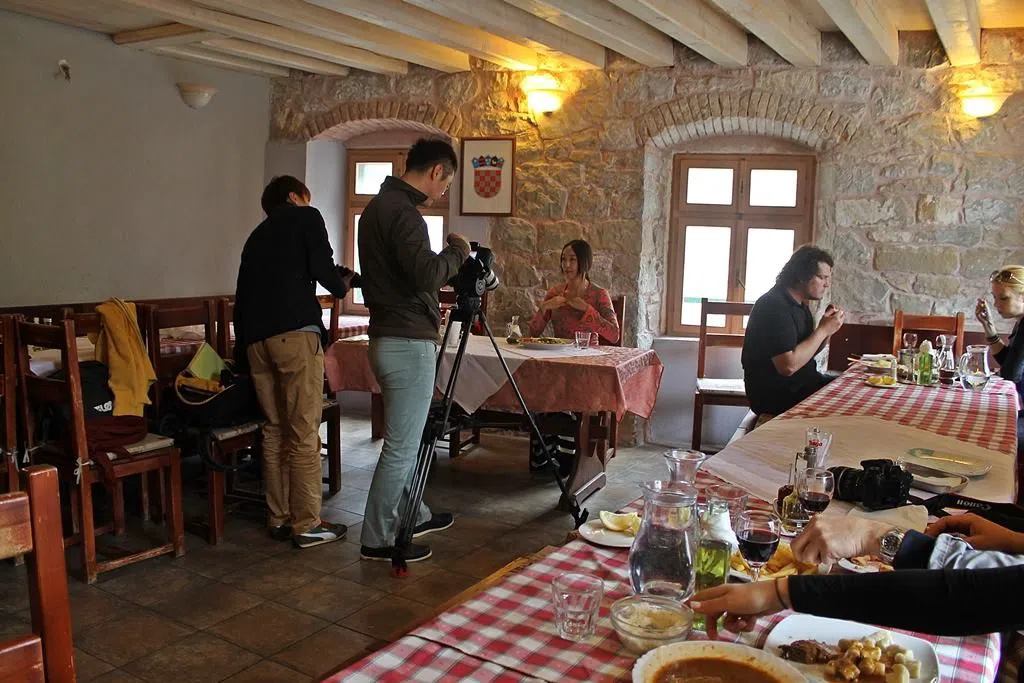
Caffe – Disco bar Treće Poluvrijeme (Poljud) is the most atmospheric fan room in Split and the hardest to plan around. The name means third half, the part after the final whistle, and it does exactly that: coffee and beer at €2–5, turning into the Kuka disco at weekends and running until 6am. It rates 4.5 from 271 reviews and deserves it. Two honest warnings. First, it is a small room, so two or three of you will slot in while a block of ten will simply take the place over and everyone will know it. Second, the hours are erratic and it can shutter for stretches in midsummer when the regulars have decamped to the coast, so treat it as a bonus rather than the plan.

When Hajduk are away, or when a Croatian fixture clashes with something else worth watching, Harat's Irish Pub Split (city centre) is the reliable fallback: big screens, regular live music, a mixed local and visiting crowd, pints at €4–8. It is the easiest room in the city for a non-Croatian speaker to join in, because half of it is already speaking English. It is also a smoking pub, which is worth knowing before you commit an evening to it. Groups are comfortable here in a way they are not at Treće Poluvrijeme.

Buying a shirt without buying a costume
Hajduk Fan Shop Riva (the Riva, on the waterfront promenade) opened in late 2024 and is the most convenient place for a visitor to kit up before kickoff. It is open daily 08:00–21:00, closed on public holidays, and runs from about €10 for a scarf to €100 for a replica shirt. The unit is small, so a group should filter in rather than arrive as a wall.

A word on wearing it. A Hajduk shirt in Split is closer to a passport than a novelty purchase, and it will get you into conversations with people who would otherwise ignore you completely. It also means you have taken a side, so wear it with the same seriousness the person next to you does. If you want the more particular version, buy from the Torcida shop instead; if you want the polished one, buy here. Both are legitimate.
The same city, off the terrace
Two places explain the terrace better than any football venue.

Peškarija (the fish market, at the western edge of the old town) is free to walk through and best in the early morning; it thins out by midday. Flies do not settle here because of the sulphur springs next door, which is a singular detail and also the least interesting thing about it. Stand for ten minutes and listen. This is the loud, unsentimental, argumentative Split that fills a stadium, the same register without the flares.
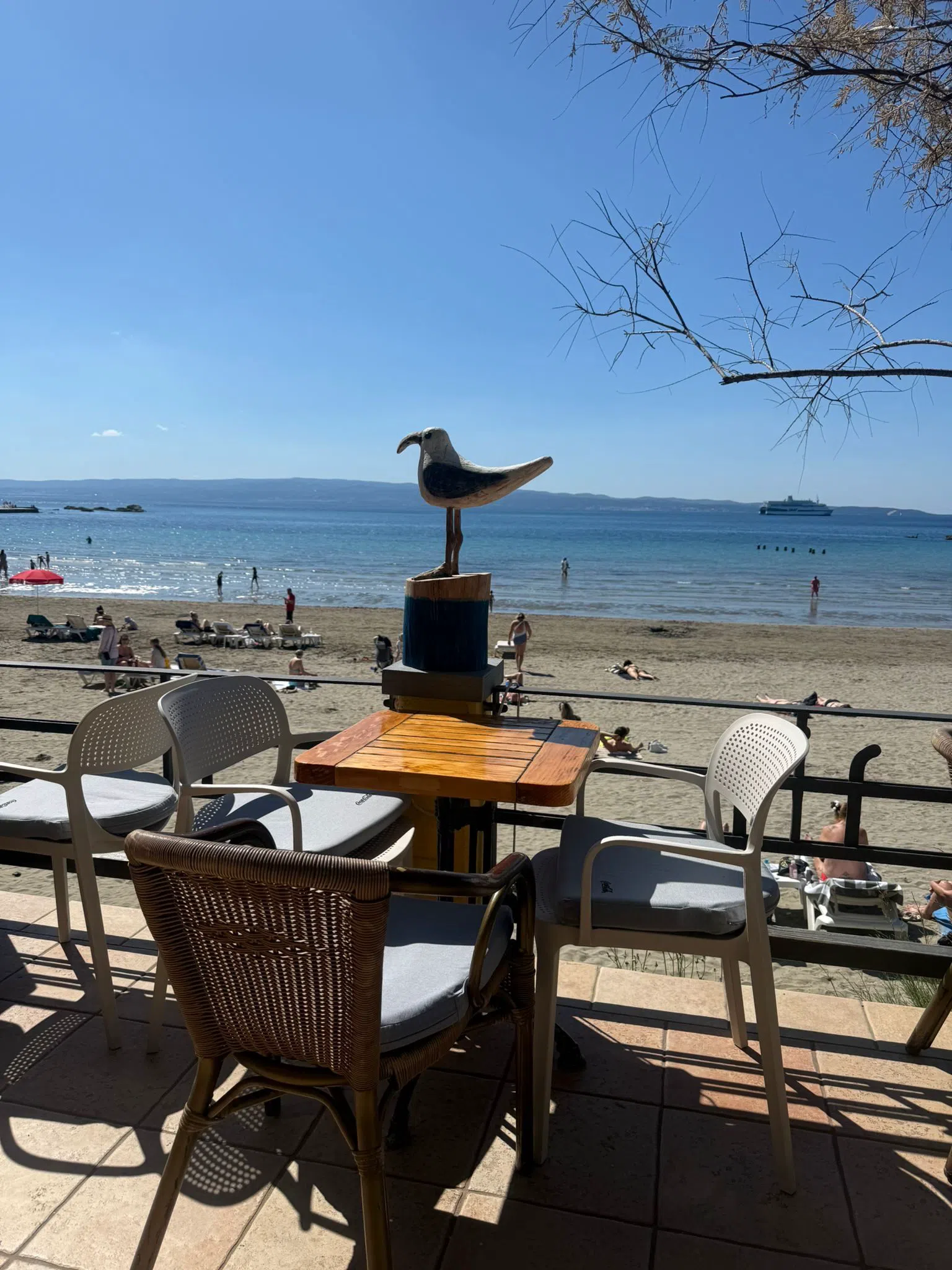
Žbirac (Bačvice, above the beach roughly ten minutes east of the Riva) is a beach café that the city treats as an institution rather than a nightspot. Coffee or beer runs €3–6, there is no door policy, the terrace is fine for a group, and the crowd is local year-round. Picigin, the shallow-water ball game invented on this beach, is played here in January as well as August, by grown men in freezing water, in front of an audience that would think it strange not to. It is the other half of the same civic identity the north stand expresses: something collective, slightly absurd, done for its own sake and defended fiercely.
The other ground across the park
Stadion Park mladeži (Park mladeži, a short walk from Poljud) is home to RNK Split, who are still active in Croatian league football and hold 4,075 people. Set that against Poljud's 34,183 and you have the single clearest measure of how completely Hajduk absorbed this city's identity: two functioning senior clubs, one of which most visitors will never hear named.

Go anyway if the fixture lands right. Tickets are €5–10 on the gate, the ground is casual and uncrowded, groups are no problem, and you will see football watched rather than performed. It is the useful control experiment, and an hour here shows you exactly how much of a Hajduk matchday is the football and how much is everything else. For the wider picture of what else the city holds, the Split guide covers the ground beyond the stadium.
Practical notes for a matchday
Getting there is easiest on foot. Poljud is about 2 km from the Riva, twenty-five minutes along the water, which is the pleasant way, or a few minutes on a local bus. Do not drive on a matchday; the streets around the ground fill and parking evaporates. Stari plac, Bačvice and Žbirac are all walkable east of the centre, and the fish market and the Fan Shop are in the old town.
Croatia uses the euro. Cards work in most places, but Konoba Fife is cash only and small bars will thank you for coins, so carry €50–100 in notes on a matchday.
Fixtures move for television, so check the club's official channels in the week of your visit rather than trusting a schedule printed a month earlier. That same volatility is why the stadium tour and the bike tour both flex. Eat two hours before kickoff, get to the ground forty-five minutes early to catch the terrace warming up, and expect the bars to be fullest for the two hours after the final whistle. If you are new to it, buy into a side stand rather than the north terrace; you will see the choreography better from across the pitch than from inside it.
Budget roughly €60–90 per person for a full day: match ticket, a €15–30 pre-match meal, the stadium tour at €10–15, and drinks after at €2–8 a round. Swap the club tour for the €80 bike tour and you are closer to €130. A scarf is €10–40 depending on where you buy it, and it is the only souvenir from this trip worth carrying home.
Base yourself between the old town and Bačvice and everything above is walkable; the Poljud side is quieter but further from dinner. Start with a Split hotel search and filter for the waterfront strip if you want the market, the Fan Shop and the late bars all within fifteen minutes on foot.
Before you go
How do I get tickets for a Hajduk match at Poljud?
Buy through the club's own official ticketing channels in the week of the match, and check the fixture time then too, because Croatian league kickoffs move for television. Avoid anything sold on the street. If it is your first match, take a side stand rather than the north terrace: from there you can see the choreography instead of standing inside it.
Can a visitor stand with Torcida on the north terrace?
You can buy into that end, but understand what you are walking into. Torcida is a members' organisation rather than a fan-experience product: people stand, sing and hold flares for ninety minutes, and nobody is there to look after a newcomer. Most visitors get more out of a side stand. If you want a real point of contact, buy a scarf at the supporters' club shop, which funds away travel and tifo.
Is the Poljud stadium tour worth doing?
For €10 to €15 and 30 to 45 minutes, yes, as orientation, but book ahead and keep your expectations low. It is the club's official account of itself, and pitch or trophy-room access is not guaranteed if the squad is training. Do it early in your stay, then spend your time in the streets and bars around the ground, where the actual culture is.
What is there to see if I am in Split without a fixture on?
Plenty. Walk to Stari plac in Firule, the neighbourhood ground Hajduk left in 1979, then do the Poljud tour. Browse the fish market first thing in the morning and finish with a beer at Žbirac above Bačvice. RNK Split at Park mladeži often has a cheap fixture on the gate at €5 to €10 when the big club is away.
Do I need cash, and which places will not take a card?
Croatia is on the euro and cards work in most restaurants and the club shops, but Konoba Fife is cash only and small fan bars prefer notes and coins. Carry €50 to €100 in cash on a matchday and you will not get caught out at Treće Poluvrijeme or the market.